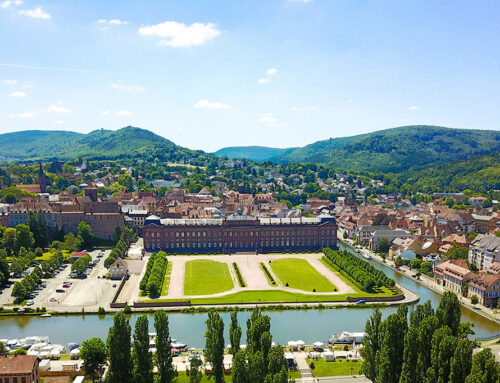

Moving to Alsace is not simply a lifestyle decision. It is a practical project involving housing, commuting, schools, healthcare, local administration and integration into a new community. For many households, the hardest question is not whether to live in Alsace, but where exactly to settle: in Strasbourg, in a smaller Bas-Rhin town, or in a specific urban neighbourhood with the right balance of services, transport and affordability.
This guide focuses on everyday life rather than tourism. It explains how to choose a place to live, how to assess the cost of living in Alsace, which local services to check before moving, and why territorial planning documents such as the SCOT can matter to future residents.
Table of Contents
- Why the choice of town matters when settling in Alsace
- Bas-Rhin towns and urban neighbourhoods: what to compare
- Assessing the cost of living in Alsace
- Schools, healthcare and local services
- Understanding SCOT and local urban planning
- A practical checklist for moving to Alsace
- Questions Fréquentes
- Chiffres Clés
- Conclusion
Why the Choice of Town Matters When Settling in Alsace
The address you choose will influence much more than your rent or mortgage. It will affect:
- The time needed to reach work or school
- Access to public transport
- School availability and catchment areas
- Access to doctors, pharmacies and social services
- Shopping and childcare options
- Exposure to traffic, noise or flood risks
- Opportunities to meet neighbours and participate in local life
- Long-term property prospects
The difference between two locations only a few kilometres apart can be significant. A central neighbourhood may offer better access to services but higher housing costs and more limited parking. A rural or semi-rural town may provide more space and a quieter environment, but require a car for everyday journeys.
When planning to reside in Alsace, avoid choosing solely on the basis of a property advertisement. First study the wider living environment.
The three main residential profiles
| Residential profile | Main advantages | Points to check |
|---|---|---|
| Strasbourg urban neighbourhood | Public transport, schools, healthcare, employment and cultural services | Rent, parking, noise, density and housing availability |
| Medium-sized Bas-Rhin town | More space, local shops, community life and often lower housing pressure | Commuting time, specialist healthcare and frequency of public transport |
| Village or peri-urban area | Larger homes, quieter surroundings and stronger residential character | Dependence on cars, fewer services and school transport |
A useful approach is to define your priorities before searching:
- Maximum acceptable commuting time
- Monthly housing budget
- Number and age of children
- Need for public transport
- Access to healthcare
- Preference for an apartment, house or accessible accommodation
- Importance of shops within walking distance
- Need for bilingual or international education
- Tolerance for urban density
- Plans to buy, renovate or build
Bas-Rhin Towns and Urban Neighbourhoods: What to Compare
The keyword ville Bas-Rhin covers very different realities. Strasbourg cannot be compared directly with a smaller town in Alsace du Nord, the Bruche Valley or the Sélestat area. Even within the same municipality, one quartier de ville can offer a very different daily experience from another.
Evaluate a neighbourhood at three different times
Before signing a lease or purchase agreement, visit the area:
- On a weekday morning, to observe school traffic and commuting conditions
- At the end of the working day, to assess parking, noise and public transport
- At the weekend, to see whether local shops and public spaces are active
Look beyond the building itself. Check the distance to:
- The nearest bakery or supermarket
- A pharmacy and general practitioner
- A nursery, primary school or secondary school
- A bus, tram or train stop
- A sports facility or library
- A recycling centre or waste collection point
- Green spaces and safe pedestrian routes
Questions to ask local residents
A short conversation with neighbours can reveal information that property listings rarely mention:
- Is the area noisy at night?
- Are parking spaces usually available?
- How long does it take to reach Strasbourg during peak hours?
- Are there regular problems with flooding, damp or heating?
- Which schools do families generally use?
- Are local shops open year-round?
- Does the neighbourhood feel active or isolated?
- Are construction projects planned nearby?
These questions are especially important for people who want to move to Alsace permanently rather than spend a short period in the region.
Assessing the Cost of Living in Alsace
The cost of living in Alsace depends heavily on location, housing type and transport needs. Strasbourg and its closest suburbs generally require a larger housing budget than many smaller towns, but living farther away may increase fuel, car maintenance and commuting costs.
Your realistic monthly budget should include more than rent or mortgage payments.
| Expense category | Questions to include in your budget |
|---|---|
| Housing | Rent or loan, service charges, property tax, insurance and maintenance |
| Energy | Heating type, insulation, electricity, water and seasonal variation |
| Transport | Public transport, fuel, insurance, parking and vehicle maintenance |
| Food | Household size, shopping habits and distance to supermarkets |
| Education | School meals, childcare, transport, supplies and activities |
| Healthcare | Supplementary insurance, consultations and travel to specialists |
| Communication | Internet, mobile phone and home installation fees |
| Local taxes and fees | Waste collection, parking permits or other municipal charges |
| Leisure and social life | Associations, sports, childcare and community activities |
📊 Strasbourg and central urban areas often reduce car dependence, while peripheral areas may require more daily driving – Household location affects the balance between housing and transport costs
A common mistake is to choose a cheaper property far from work, schools and shops without calculating the total cost of travel. For a household with two cars, the apparent housing saving may disappear quickly.
Rent first, buy later when possible
For many newcomers, renting for six to twelve months is a sensible way to understand daily life before buying. This allows you to test:
- The actual commute in winter and bad weather
- Public transport reliability
- School routes
- Local noise levels
- Heating costs
- The social atmosphere of the neighbourhood
- Access to doctors and essential services
If you are considering social housing, the official national platform includes the Bas-Rhin among the departments covered by the housing application process. Requirements and waiting times vary, so it is advisable to begin the process early.
“The official housing application platform includes the Bas-Rhin and provides access to social housing procedures”
— demande-logement-social.gouv.fr
Schools, Healthcare and Local Services
Education in Alsace
Families should identify the responsible municipality and school district before choosing accommodation. In many cases, enrolment begins with the town hall, while the school provides additional documents and practical information.
Prepare the following documents:
- Proof of address
- Identity documents for parents and children
- Family record book or equivalent civil-status documents
- Previous school records
- Vaccination records where required
- Information concerning special educational needs
- Proof of guardianship or parental authority if applicable
Do not assume that a property is automatically close to the school you prefer. School catchment areas can change, and the nearest school may not be the assigned establishment.
For secondary education, check the journey independently. A school may appear close on a map but require a complex bus or train connection. Parents should also investigate school meals, after-school care, childcare availability and holiday arrangements.
Healthcare access
Before moving, identify:
- A general practitioner accepting new patients
- The nearest pharmacy
- A dentist and optician
- Emergency care options
- A hospital or clinic
- Maternal and child health services
- Specialist care if a family member has a chronic condition
Healthcare access may be easier in a large urban area, but demand can also be higher. In smaller towns, local healthcare networks may be strong, while specialist appointments may require travel to Strasbourg or another regional centre.
Everyday public services
The first months after a move are easier when you create a local services file containing:
- Town hall contact details
- Intermunicipal authority
- Waste collection calendar
- Water and energy providers
- Public transport network
- School and childcare contacts
- Local social action centre
- Employment or training services
- Emergency and medical contacts
- Local associations
This practical file is particularly useful for families, older residents and people who do not yet speak French confidently.
Understanding SCOT and Local Urban Planning
The SCOT, or Schéma de Cohérence Territoriale, is a strategic planning document covering several municipalities. It coordinates long-term policies relating to housing, transport, economic development, environmental protection, mobility and the organisation of land use.
For residents, the SCOT may sound technical, but its consequences are practical. It can influence:
- Where new housing is built
- How agricultural and natural land is protected
- The development of public transport
- The location of schools and public facilities
- Commercial development
- Urban density
- Road and mobility projects
- Management of flood or environmental risks
The SCOT does not usually determine the exact rules for a single plot. Those rules are more directly established through documents such as the local urban plan, or PLU. However, local planning documents must remain compatible with higher-level territorial strategies.
“A SCOT coordinates urban planning, housing, transport, economic development and environmental policies across several municipalities”
— Services de l’État dans le Bas-Rhin
Which SCOT concerns your future address?
The Bas-Rhin includes several territorial planning areas, including:
- SCOT of the Strasbourg region
- SCOT Alsace du Nord
- SCOT of the Sélestat region
- SCOT of the Vosges Piedmont
- Other areas at different stages of development or revision
The correct SCOT depends on the municipality, not simply on the nearest large town. If you are comparing several properties, identify the relevant SCOT for each location.
The SCOT of the Strasbourg region is also commonly referred to as SCOTERS. Its documents can help residents understand the broad planning direction of the wider area.
How residents can use SCOT information
You may consult planning documents when:
- Buying land or a house
- Considering a renovation or extension
- Checking whether new development is planned nearby
- Comparing towns for a future move
- Assessing transport and infrastructure projects
- Participating in public consultations
- Understanding environmental or landscape protections
For a specific property, contact the relevant town hall or intermunicipal planning service. Ask for:
- The applicable PLU or intermunicipal PLU
- The zoning classification
- Current planning permissions nearby
- Public inquiries or consultations in progress
- Known transport or infrastructure projects
- Flood, environmental or other risk information
- The relevant SCOT and its current status
[ACTION CHECKLIST: Before buying or renting, consult the municipality, intermunicipal authority and relevant SCOT to confirm zoning, planned developments and public-service projects.]
The Adeus urban planning agency also provides accessible explanations of SCOT documents and their relationship with housing, mobility, commerce and environmental policy.
“A SCOT provides a territorial framework for housing, mobility, commerce, environmental policy and local planning documents”
— Adeus, Strasbourg Rhin supérieur urban planning agency
A Practical Checklist for Moving to Alsace
Three to six months before moving
- Define your target towns and neighbourhoods
- Compare housing and transport costs
- Check school catchment areas
- Contact employers, schools and healthcare providers
- Research rental guarantees or mortgage requirements
- Identify the relevant municipality and intermunicipal authority
- Review SCOT and local planning information
- Prepare translated administrative documents if necessary
One to two months before moving
- Sign the lease or purchase agreement
- Arrange utilities and internet
- Organise removal services
- Notify banks, insurers and public administrations
- Apply for school or childcare places
- Register for public transport where relevant
- Check home insurance requirements
- Confirm waste collection arrangements
During the first month
- Complete address changes
- Register children with the relevant school
- Locate medical and emergency services
- Visit the town hall or local public service centre
- Join one local association or activity
- Introduce yourself to neighbours
- Test commuting routes at peak times
- Record recurring costs for a realistic household budget
Integration usually happens through repeated everyday contact rather than one major event. A sports club, parents’ group, local association, language course or neighbourhood initiative can make it easier to build relationships naturally.
Questions Fréquentes
Is Strasbourg the best place to live in Alsace?
Not necessarily. Strasbourg offers a wide range of jobs, schools, healthcare and public transport, but housing can be more expensive and urban life is denser. A smaller Bas-Rhin town may be more suitable for households seeking space, quieter surroundings or a lower housing budget. The best choice depends on commuting, family needs and access to services.
Which Bas-Rhin town should I choose for a permanent move?
Start with your daily requirements rather than a list of famous towns. Compare commuting times, schools, healthcare, local shops, housing prices, public transport and future planning projects. A town that works well for one family may be unsuitable for another.
What is the difference between a SCOT and a PLU?
A SCOT sets broad planning and development priorities across several municipalities. A PLU applies more detailed land-use rules at the municipal or intermunicipal level, including zoning and construction conditions. The PLU must be compatible with the wider territorial strategy established by the SCOT.
Should I rent before buying in Alsace?
For many newcomers, renting first is useful. It provides time to test the neighbourhood, commute, heating costs, school arrangements and local services. This is especially valuable when moving from another region or another country.
How can I integrate into local life?
Begin with practical, repeated activities: join a sports club, contact a local association, attend parent meetings, use municipal services and participate in neighbourhood initiatives. Learning basic French administrative vocabulary can also make everyday interactions much easier.
Chiffres Clés
📊 Several SCOT areas cover the Bas-Rhin, including the Strasbourg region, Alsace du Nord, the Sélestat region and the Vosges Piedmont.
Source: Services de l’État dans le Bas-Rhin
🏘️ The SCOT of the Strasbourg region covers a large intermunicipal area, meaning that housing, transport and environmental planning must be considered beyond the limits of Strasbourg itself.
Source: SCOT and territorial planning resources
🧭 A SCOT does not replace the local PLU: residents should consult both documents when evaluating a property, renovation project or future development area.
Source: Adeus and Services de l’État in the Bas-Rhin
📊 Check both the municipal planning rules and the wider SCOT strategy before committing to a property – Territorial planning and residential choice
Conclusion
To live in Alsace successfully, it is essential to look beyond the image of the region and examine its practical organisation. Choosing a town or urban neighbourhood means comparing housing, commuting, education, healthcare, local services and future development.
The right location may be Strasbourg, another ville du Bas-Rhin, or a smaller municipality connected to a larger employment area. What matters is whether the place supports your daily routine and long-term plans.
Before moving, visit the neighbourhood at different times, calculate the complete cost of living, contact local services and consult the relevant SCOT and PLU. This approach will help you make a more informed decision, integrate more easily and build a stable everyday life in Alsace.